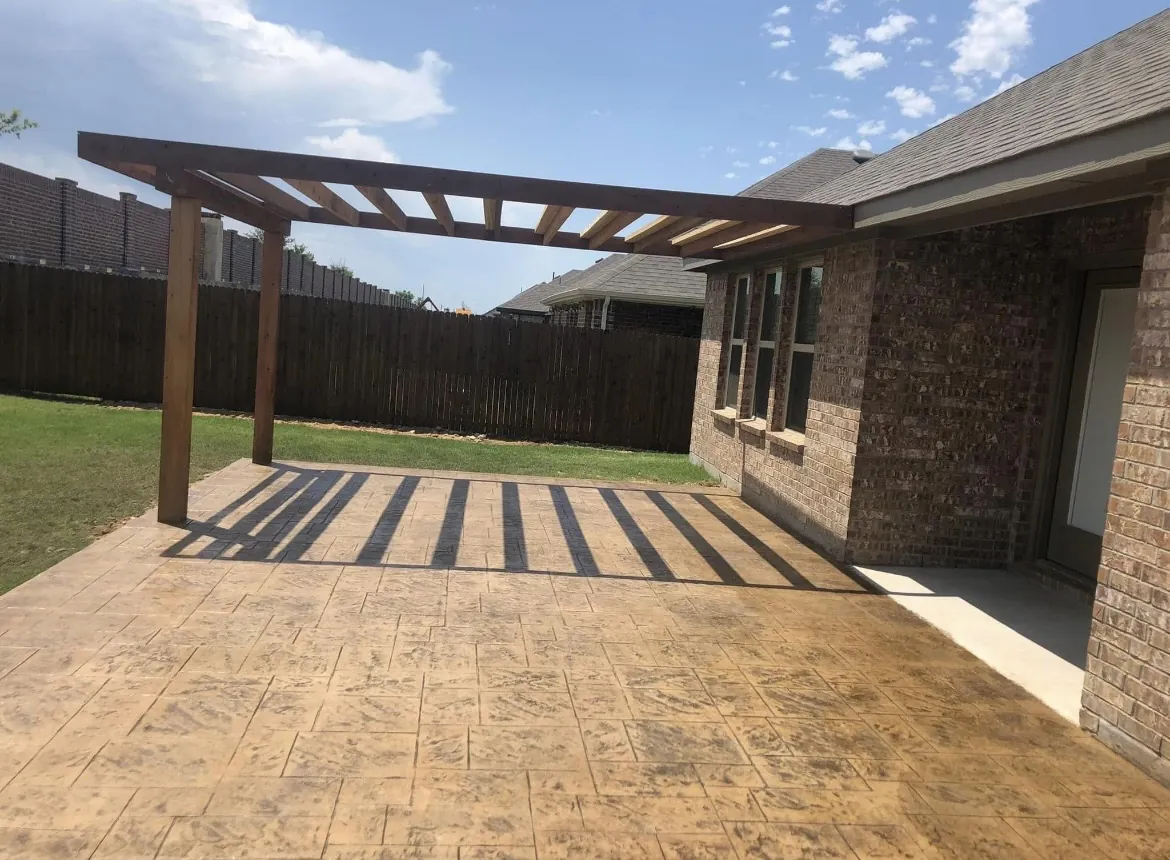
Stone fire pits and seat walls in Dallas TX: what the job involves
A stone fire pit and seat wall is a small masonry job with three decisions that matter more than the stone: where the fire can legally and sensibly go, whether it burns wood or gas, and how the pit and walls sit on Dallas clay. Archetex Outdoor Design Co. builds fire pits, seat walls and stone veneer as part of the patio rather than as a kit set on the lawn. Like the rest of Matthew's patio and outdoor-living work, each one starts with a conversation about how the yard is used, not a fixed catalog. The design accounts for grading, drainage and how the space connects to the house. If the job also includes a patio, walkway or cover, it is planned as one design.
A typical build goes in this order:
- Site the pit. Measure the distance to the house, fence, deck and any pergola, and check which way the evening wind carries smoke.
- Set the base. Excavate, then build a compacted base or footing so the pit and walls do not move with the soil.
- Build the core. Lay the block core of the pit and walls, with a steel ring or firebrick lining for a wood fire, or a sleeve and burner pan for gas.
- Finish the faces. Face the core in natural stone, manufactured stone or brick, then set the caps at seat height.
- Tie it in. Connect the pit to the patio surface and grade the ground so water runs away from it.
Wood-burning vs gas fire pits in Dallas
Wood is cheaper to build and gives the bigger fire. Gas costs more, is easier to live with, and fits on smaller lots. Fixr's national cost guide puts a built-in wood-burning pit at $300 to $1,000, propane at $300 to $950, and natural gas at $400 to $3,000.
| Wood-burning | Natural gas | Propane | |
|---|---|---|---|
| Built-in cost (Fixr, national) | $300 – $1,000 | $400 – $3,000 | $300 – $950 |
| Fuel supply | Firewood, stored dry | House gas line, extended at $15 – $25 per foot | Refillable tank, hidden in the surround or nearby |
| Smoke and ash | Yes, and it drifts to the neighbors | Almost none | Almost none |
| Clearance driver | Fire code: 25 ft from structures and combustibles for a recreational fire | Burner maker's listed clearances | Burner maker's listed clearances |
| City permit | Fire-code rules on use and clearance; confirm with Dallas Fire-Rescue | Plumbing permit for the gas line | Check tank size and placement |
In practice, many Dallas lots decide this for you. On a typical subdivision back yard with a wood fence on three sides, a 25-foot clearance from both the house and the fence often leaves no spot that works, and a gas pit is the realistic choice. On a bigger lot with open space past the patio, wood works fine.
Dallas fire pit rules: recreational burning, clearances and gas
The fire code Dallas adopted allows recreational fires, restricts open burning, and requires a recreational fire to be kept clear of structures. Dallas adopted the 2021 International Fire Code, with local amendments, as Chapter 16, the Dallas Fire Code. The city lists the amendment as effective February 10, 2023. Section 307 of the model code sets the baseline:
- What counts as a recreational fire: a fire for pleasure, cooking or warmth, burning anything other than rubbish, with a fuel area no more than 3 feet across and 2 feet high (IFC definitions).
- Clearance: a recreational fire cannot be within 25 feet of a structure or combustible material (IFC 307.4.2). That covers your fence, a cedar pergola and a wood deck as well as the house.
- Portable fire pits and chimineas: these must be 15 feet from a structure, but one- and two-family homes are exempt (IFC 307.4.3).
- Bad conditions: open burning is prohibited when the weather or local conditions make it hazardous (IFC 307.1.1). In a dry, windy North Texas spell, that means no fire.
- Attendance: someone must stay with the fire until it is out, with a 4-A fire extinguisher or other approved equipment, such as a garden hose, ready (IFC 307.5).
Dallas amends parts of the model fire code, so before the location of a permanent pit is fixed, confirm with Dallas Fire-Rescue the clearance it applies to a built-in fire pit. Suburbs such as Plano, Frisco and McKinney adopt their own versions of the fire code, so the rule can change at the city line.
Gas fire pits: a permanent natural-gas line is gas piping, and in Dallas that needs a plumbing permit. The permit is pulled by a licensed plumbing contractor, or by a homeowner who lives in the house and has a homestead exemption, and the line is pressure-tested before service. The burner itself is installed to its maker's instructions, which set its clearances and how the surround must vent.
Seat walls: height, depth and how many people they seat
A seat wall works at 18 to 22 inches high with a cap 12 to 18 inches deep. Allow 22 to 24 inches of wall per person (Concrete Network). That makes the arithmetic simple: a 12-foot straight wall seats about six, and a curved wall wrapped around a third of the pit seats more without anyone facing away from the fire. The height is measured from the finished patio surface, not from the dirt. The cap sits slightly proud of the wall face so the top is comfortable to sit on and sheds water.
Leave enough distance between the seat wall and the fire for feet and for heat. On a wood pit, that is usually more than people expect. A seat wall can also do a second job: on a yard that falls away from the house, it can hold the edge of a raised patio, which makes it a low retaining wall with a seat on top.
Stone choices and stone veneer
Most stone fire pits and seat walls are a concrete-block core faced with stone, rather than solid stone. A faced core is quicker to build, easier to keep level, and lets the pit, walls and any columns match. The main options:
- Natural thin stone veneer. Real stone cut thin for cladding. It costs $9 to $15 per sq ft for materials (Fixr, national).
- Manufactured (cultured) stone. A cast product made to look like stone. It costs $5 to $10 per sq ft for materials and weighs less (Fixr, national).
- Brick. A 36-inch brick pit costs $300 to $2,200 installed, against $350 to $3,010 for field or quarried stone (Fixr, national).
- Caps. Flat stone or cast caps on top of the seat walls. These are the part people sit on, so they should be smooth and sealed.
Fixr’s national guide puts stone veneer at $7 to $12 per sq ft installed over brick or concrete. The inside of a wood-burning pit should be a steel ring or firebrick, not decorative stone: some stone, especially rounded river rock that holds moisture, can crack or spall in direct flame. If you already have stone-base columns on a covered patio, Archetex can face the pit and walls to match them.
Dallas clay, drainage and pairing with a flagstone or stamped patio
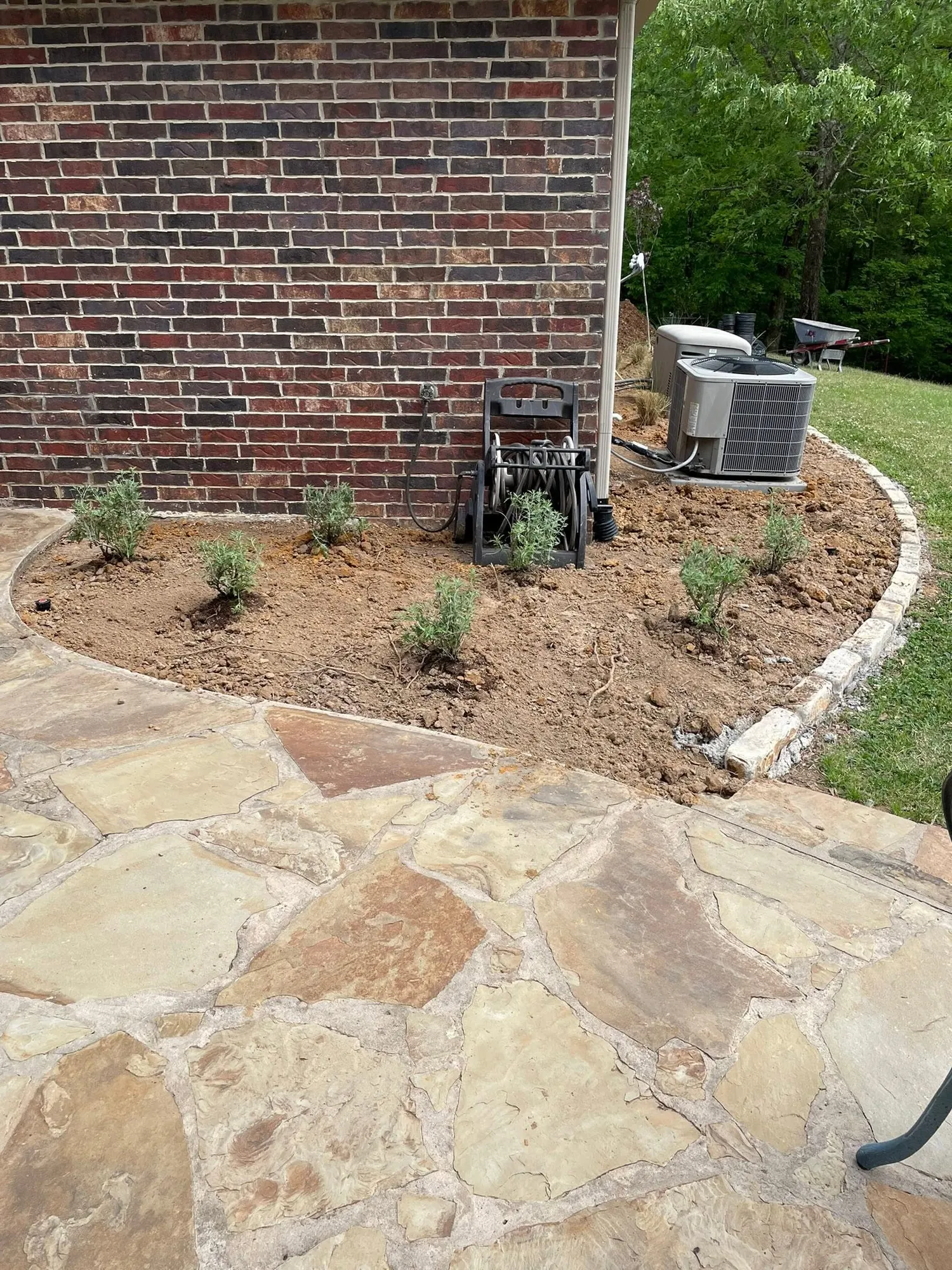
Masonry on Blackland Prairie clay needs a proper base, because the soil swells when it is wet and shrinks when it dries, and a stone wall set on bare dirt cracks with it. Each pit and wall gets a compacted base, and the patio around it is graded so water runs away from the pit and does not pool inside it.
The pit should sit on a hard surface, not grass. The two common pairings:
- Flagstone. Natural, irregular and set on compacted base. It matches stone veneer well and suits a pit set out in the yard. See walkways and stone features.
- Stamped concrete. Fixr’s national guide puts it at $15 to $30 per sq ft installed. It gives one continuous surface from the back door to the fire and can be poured with the pit's footing in mind.
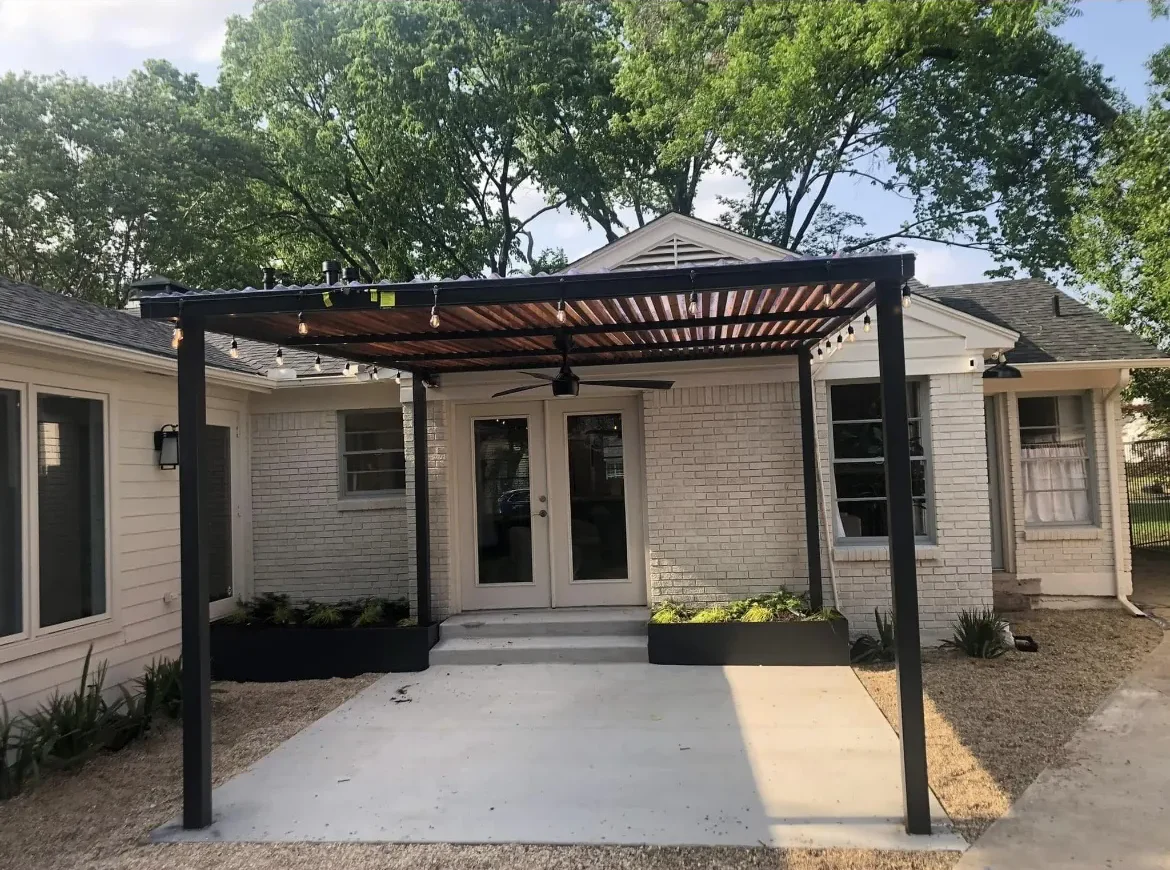
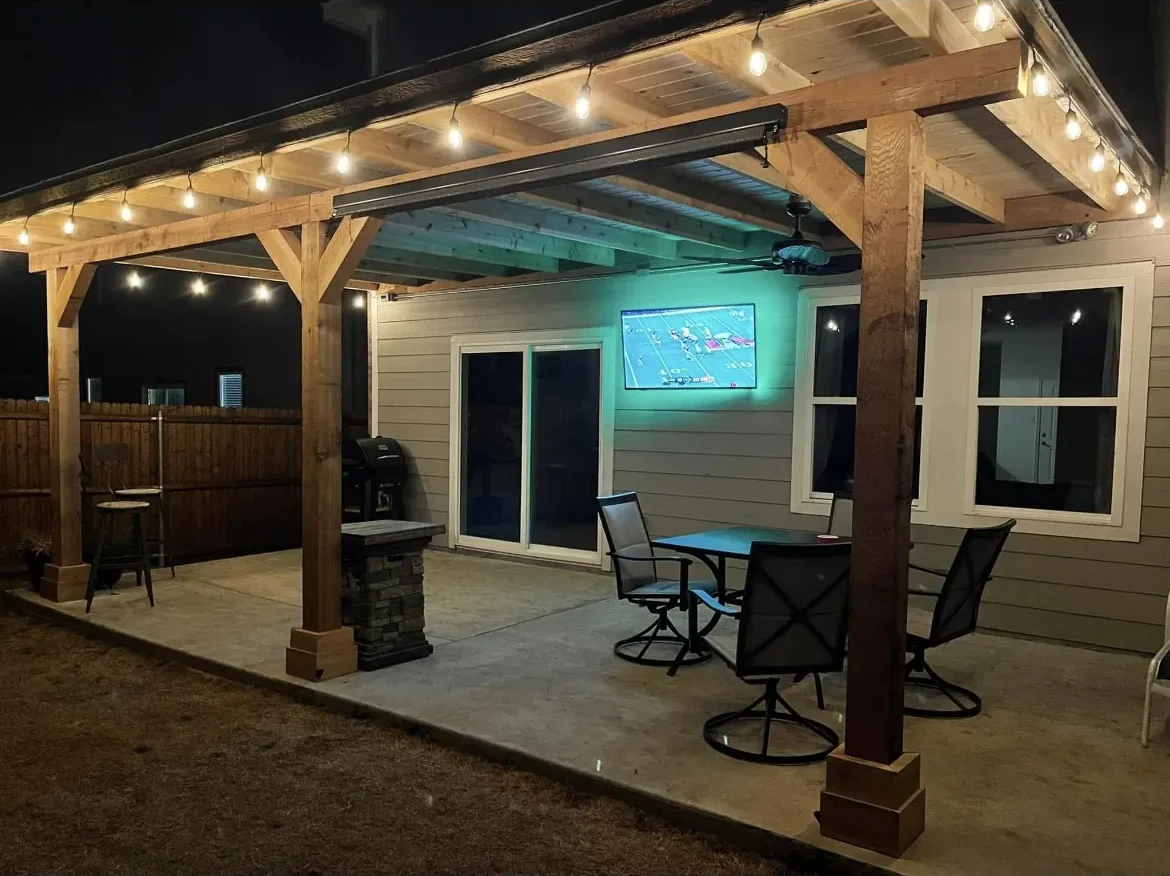
Fixr puts a patio with a fire pit at $4,500 to $9,000 nationally. If you want a cover, a kitchen or planting as well, the outdoor living page explains how Archetex draws the whole space first and builds it in stages. A wood fire under or beside a cedar pergola breaks the 25-foot clearance, so plan the fire and any cover together.
Fire pit cost in Dallas TX in 2026
A built-in fire pit costs a few hundred dollars for a simple wood-burning ring and several thousand for a gas pit with seating. The figures below are from Fixr's national cost guide (updated January 2025), Fixr's stone siding guide (August 2025) and Concrete Network's seat wall sizing. They are national market ranges, not Archetex's prices.
| Item | Typical cost | Source |
|---|---|---|
| Built-in wood-burning fire pit | $300 – $1,000 | Fixr |
| Built-in propane fire pit | $300 – $950 | Fixr |
| Built-in natural-gas fire pit | $400 – $3,000 | Fixr |
| Gas line extension | $15 – $25 per linear ft (20 ft: about $400 – $500) | Fixr |
| 36-inch brick fire pit | $300 – $2,200 | Fixr |
| 36-inch field or quarried stone fire pit | $350 – $3,010 | Fixr |
| In-ground fire pit | $1,000 – $3,000 | Fixr |
| Built-in seating area | $1,500 – $3,000 | Fixr |
| Stone veneer over brick or concrete, installed | $7 – $12 per sq ft | Fixr |
| Stamped concrete patio | $15 – $30 per sq ft | Fixr |
| Patio with fire pit | $4,500 – $9,000 | Fixr |
The price goes up with a gas line run from the far side of the house, natural stone instead of manufactured, curved seat walls, and any work needed to level a sloping yard. Archetex Outdoor Design Co. gives a written price after a free site visit.
How to choose a fire pit builder in Dallas, and what the quote should say
Look for a builder who measures the clearances before talking about stone. They should show you finished stonework, tell you who runs and permits a gas line, and put the price in writing. A good written quote for a fire pit and seat wall states:
- the location, with the distances to the house, fence and any wood structure;
- the fuel (wood, natural gas or propane), the burner or ring, and who handles the gas permit;
- the base or footing, and how drainage is handled;
- the core material, the face (natural, manufactured or brick) and the cap;
- seat wall heights and lengths;
- the patio surface around the pit, if it is included;
- cleanup, and what you get at the final walkthrough.
Archetex's Google reviews repeat the same things: communication and daily updates, punctuality, help with design, a clean site and reasonable prices. See finished patios and structures on our work, or contact Matthew for a free estimate in Dallas, Richardson, Garland, Rockwall and the rest of the area.