What does a xeriscape yard in Dallas TX involve?
A xeriscape yard in Dallas is a planted landscape designed to live on far less water than a lawn: native and adapted plants grouped by their water needs, a permeable surface such as gravel or decomposed granite in place of turf that struggles, edging that keeps those materials in place, and drip irrigation to the beds instead of spray heads over everything. It is not a yard of bare rock. Done well it looks finished in the first season and gets better as the plants fill in.
The job usually runs in this order: remove the existing turf, set the grades so water runs away from the house, install edging, lay drip lines to the beds, plant, then spread the surface materials. Getting the grade and drainage right comes first because Dallas clay does not forgive a yard that sends water toward the foundation.
How Archetex designs a xeriscape front or back yard
Archetex designs every yard by starting with how it is used, then accounts for grading, drainage and how the space connects to the house. On a xeriscape that means a few practical decisions before any plant is chosen:
- Where people walk. Paths to the front door, side gate and trash cans get a firm surface. Gravel or decomposed granite goes there, not in the beds.
- Where water goes. Downspouts, low spots and the slope off the slab decide where beds, gravel and any dry creek sit.
- Sun and shade. A west-facing front yard in full sun and a back yard under a mature live oak take completely different plant lists.
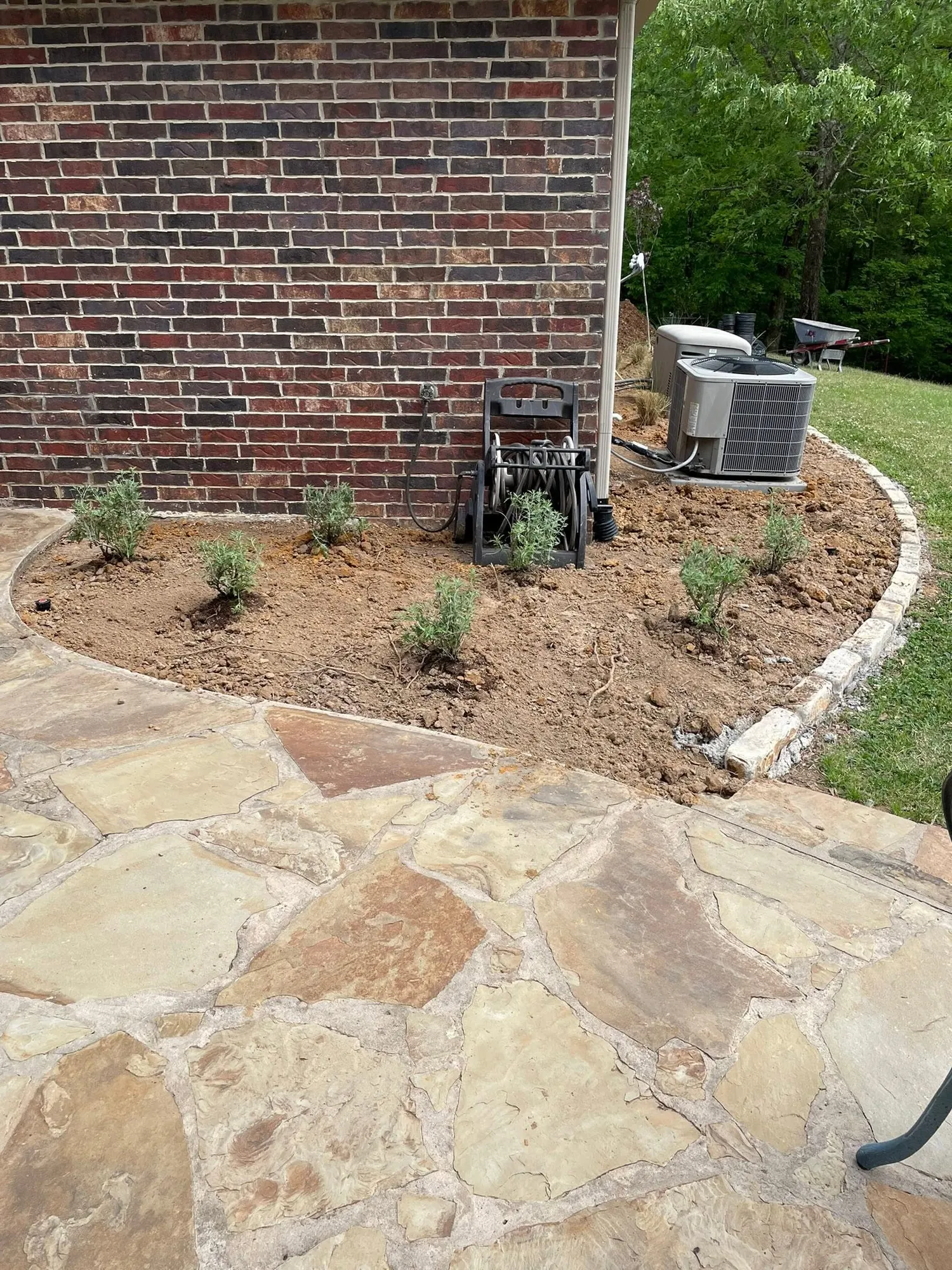
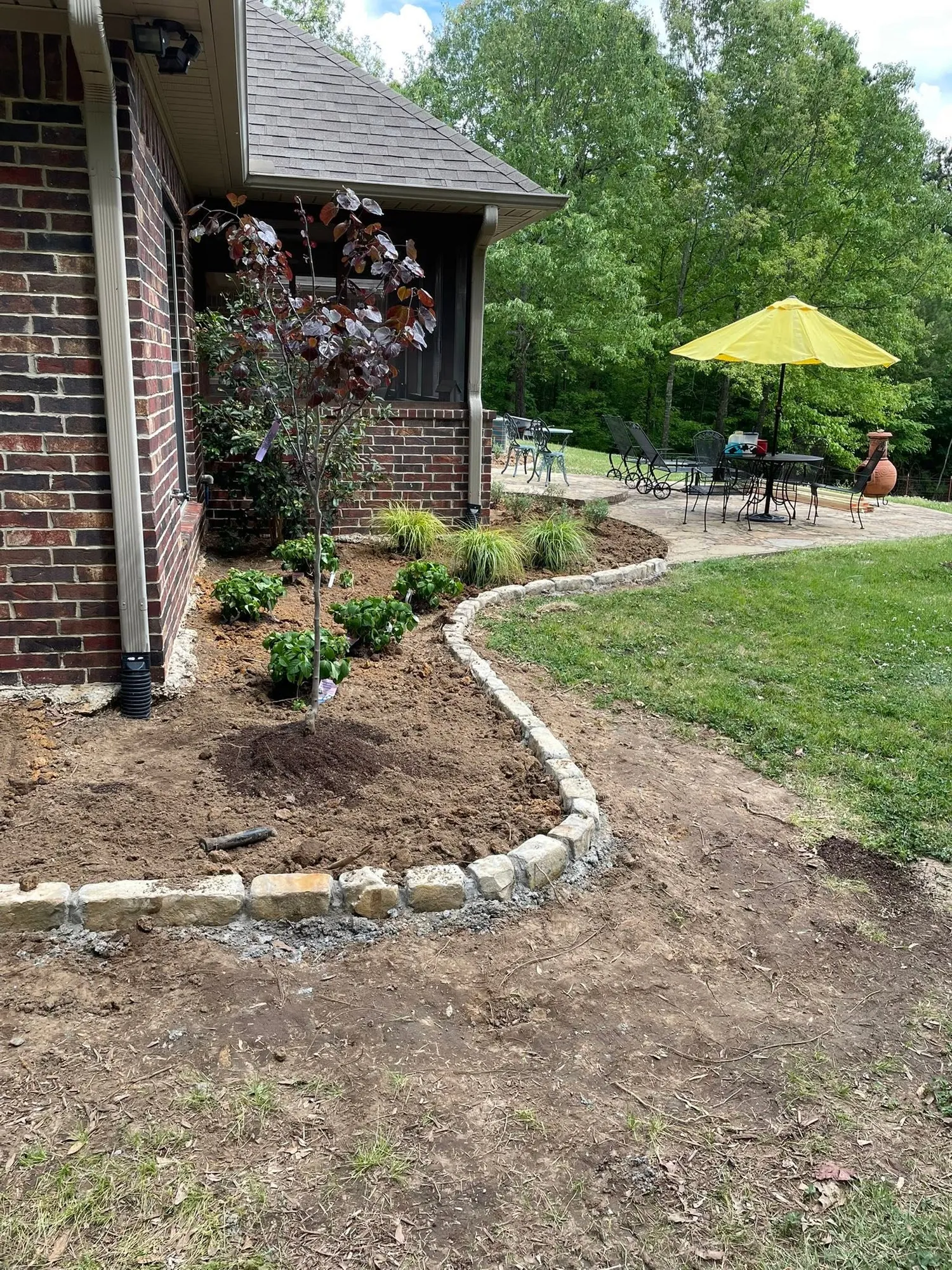
- Edges. Natural stone, brick or steel edging sets the shape and stops gravel and mulch migrating into each other or the lawn.
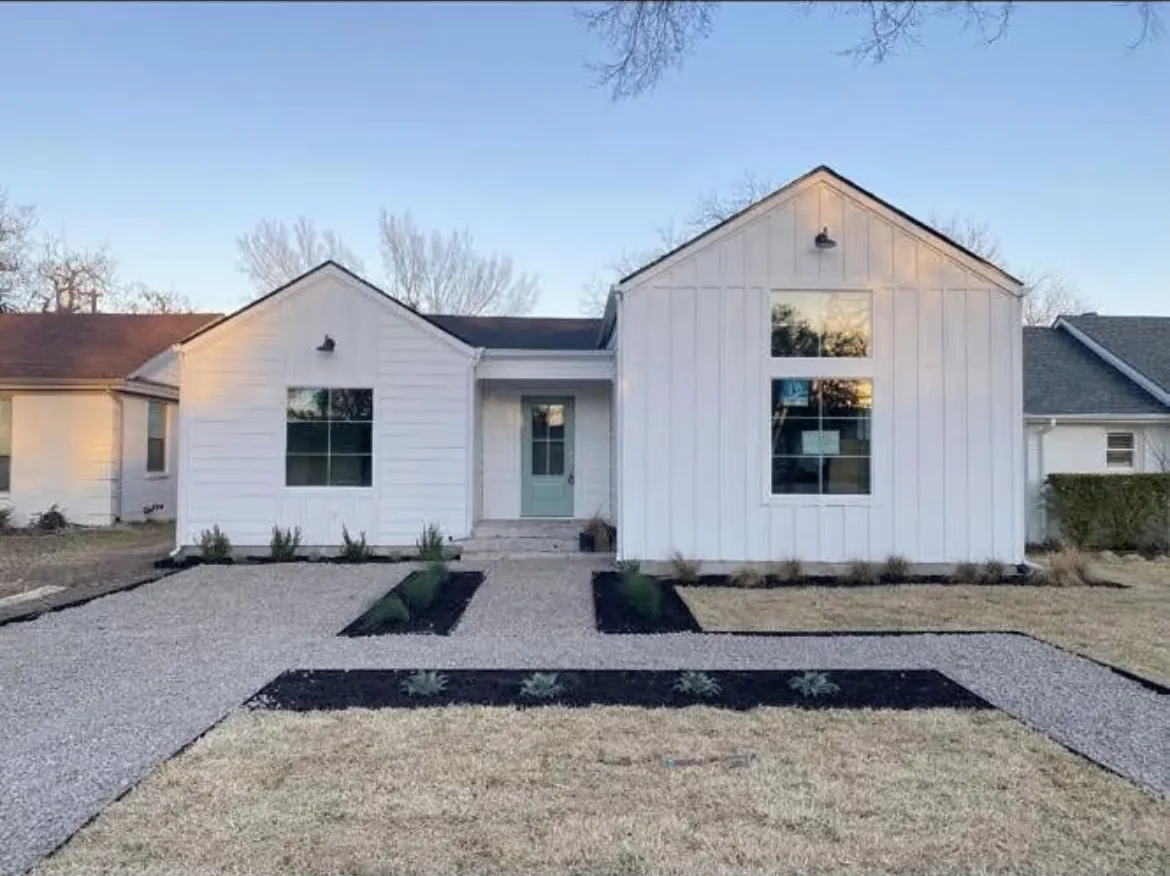
Archetex's own work includes gravel xeriscape front yards and stone, brick and steel bed edging. You can see examples on our work. If the xeriscape is part of a bigger plan, such as a new patio or walkway, it is drawn as one design with the rest. See landscape design and walkways and stone features.
Which native and adapted plants work for xeriscape in Dallas?
Choose plants from lists made for North Texas soil and heat, not from a generic "drought tolerant" tag. Two official lists are worth using:
- Texas A&M AgriLife Water University's Top 100 Native and Adapted Plants for North Texas. AgriLife describes these plants as drought tolerant and heat tolerant, typically needing less water, less fertilizer and fewer pesticides.
- Texas SmartScape, a program of the North Central Texas Council of Governments. It defines native plants as those that "originate or grow naturally in a defined area" and adapted plants as those from elsewhere that thrive in North Texas. Its North Central Texas list was reviewed and updated by horticulture experts in 2016.
From the AgriLife Top 100, plants that fit a sunny Dallas xeriscape include:
- Perennials: Turk's cap, Texas lantana, Henry Duelberg mealycup sage, blackfoot daisy, damianita, Mexican bush sage and flame acanthus.
- Grasses: little bluestem, Mexican feather grass, Gulf muhly and white cloud muhly.
- Shrubs: Texas sage, autumn sage, dwarf yaupon holly, rosemary and bush germander.
- Yuccas and accents: red yucca, soft leaf yucca and Color Guard yucca.
- Groundcovers and shade: frog fruit and horse herb for open ground; inland sea oats and Berkeley sedge under trees.
The AgriLife booklet describes North Texas soils as mostly poorly draining, alkaline clays and clay loams, with a pH around 7.5 to 7.8. It recommends compost and expanded shale to improve drainage in new beds. That matters on Blackland Prairie clay: a drought-tolerant plant can still drown in a bed that holds water after a spring storm.
What are the Dallas Water Utilities watering rules in 2026?
Dallas allows sprinkler watering no more than twice a week, year-round, on days set by your address. The bigger change is new: the City of Dallas Water Conservation Ordinance was revised in May 2026, and the ban on watering with automatic irrigation systems or hose-end sprinklers between 10 a.m. and 6 p.m. now applies on every day of the year. Before the revision it applied only from April 1 to October 31.
Hand watering, soaker hoses and drip irrigation are not tied to your two assigned days; they can be used on any day of the week. The City's 2026 notice describes the hours ban as covering automatic systems and hose-end sprinklers, and says foundations may be watered at any time by hand, soaker hose or drip. The amended ordinance text, effective May 26, 2026, goes further: it bans watering any lawn or landscape with city water between 10 a.m. and 6 p.m. So the safe plan is to run drip zones in the early morning or evening. Automatic sprinkler systems must have working rain and freeze sensors. Dallas Water Utilities customers can also request a free irrigation system evaluation through SaveDallasWater.com. DWU lists its current conservation programs there, so check them before you start, because program terms change.
This is the practical case for xeriscape in Dallas. A lawn depends on spray irrigation squeezed into the morning and evening hours on two days a week. A planted xeriscape on drip can be watered at the roots on any day of the week, outside the 10 a.m. to 6 p.m. window, inside the rules.
How much water does xeriscaping save?
The saving comes mostly from shrinking the area you spray. Texas SmartScape notes that about 30% of the average U.S. water bill goes to outdoor use, citing the EPA, and that in North Texas it can be up to 70%. The EPA's WaterSense program says careful plant selection and design can reduce outdoor water use by 20 to 50 percent, and cites expert estimates that up to half of landscape water can be wasted through evaporation, wind and runoff from overwatering.
Two caveats. First, new plants need regular water for their first season while roots establish, so the saving builds over time. Second, a xeriscape still needs some care: weeding gravel, topping up mulch and checking drip lines. AgriLife's Water University suggests a "rule of thirds" for a lower-water yard: one third drought-tolerant turf, one third native and adapted beds and one third pervious hardscape. You do not have to remove all the grass.
Gravel vs decomposed granite vs mulch: which goes where?
Each surface has a job. Gravel is for drainage and open ground, decomposed granite is for walking and sitting, and organic mulch is for planting beds.
| Material | Best use | Watch for | Materials-only price (Fixr) |
|---|---|---|---|
| Pea gravel | Paths, open ground, side yards | Rolls underfoot; needs firm edging | $30–$60 per ton or $15–$75 per cubic yard |
| Decomposed granite | Walkways, seating areas, around patios | Needs compaction; can track indoors if loose | $25–$50 per ton or $30–$50 per cubic yard |
| Crushed granite gravel | Driveway edges, firmer paths | Higher cost than pea gravel | $75–$100 per ton or $50–$70 per cubic yard |
| River rock | Dry creek beds, downspout outlets | Hard to walk on; heavy | $2.75–$6 per sq ft |
| Organic mulch | Planting beds, around shrubs | Breaks down; top up yearly | $10–$60 per cubic yard |
These are materials-only prices from Fixr's landscaping stones and xeriscaping guides, not installed prices. AgriLife's Water University recommends 2 to 4 inches of mulch in beds, tapered away from plant stems, to hold moisture, control weeds and moderate soil temperature. In full Dallas sun, gravel and rock also hold heat, so keep large expanses of stone away from the west wall of the house and leave room for plants that will shade it.
Why steel edging matters on a xeriscape
Steel edging is what keeps a xeriscape looking designed rather than spilled. It holds a clean line between gravel, mulch and lawn, it bends to follow curves, and it sits low enough to step over. Without a hard edge, gravel works into the beds and the grass, and mulch washes onto paths after the first heavy rain. Archetex uses natural stone, brick and steel bed edging depending on the look of the house. Steel suits a clean modern front yard; natural stone suits a softer, older lot.
Can a Texas HOA stop you from xeriscaping?
Not outright. Texas Property Code §202.007 says a property owners' association may not include or enforce a provision that prohibits or restricts an owner from using drought-resistant landscaping or water-conserving natural turf. A provision that does is void. The same section lets the association require new turf to be a water-conserving variety.
The HOA still has a say in how it looks. Under §202.007 an association may regulate gravel, rocks and cacti, and it may require you to submit a detailed description or plan so it can check, as far as practicable, that the design is aesthetically compatible with other landscaping in the subdivision. It may not unreasonably deny or withhold approval of that plan. There is a narrow exception for an association in a city of more than 175,000 people, in a county where a city of more than one million is mainly located, that manages a development with at least 4,000 acres set aside for commercial, multifamily or open-space use.
In practice: if you live in an HOA in Plano, Frisco or McKinney, submit a drawn plan with the plant list, materials and edging before any work starts. A plan with real plants in defined beds is much easier to approve than "rock the front yard." See our Plano, Frisco and McKinney pages.
How much does xeriscaping cost per square foot in Dallas TX in 2026?
Expect about $5 to $20 per square foot installed. Fixr's xeriscaping cost guide puts the typical project at $16,000 to $18,000, with these sample ranges:
| Item | Typical range (Fixr) |
|---|---|
| Xeriscaping, installed | $5–$20 per sq ft |
| Front yard, 1,000 sq ft | $5,000–$20,000 |
| Back yard, 1,200 sq ft | $6,000–$24,000 |
| Drip irrigation, installed | $1.50–$3.50 per sq ft |
| Rock and stone installation | $250–$2,500 per project |
| Mulch, typical project | $150–$400 |
| Shrubs (plant only) | $6–$87 each |
The low end is mostly gravel with a few beds. The high end has more and larger plants, decomposed granite paths, steel edging throughout, drip to every bed and any regrading or drainage work. These are national market figures, not Archetex's price. Archetex gives a written price after a free site visit.
How to choose a xeriscape contractor in Dallas
Ask questions that show whether a contractor plans the yard or just spreads rock:
- Will they draw a plan with a plant list you can give to your HOA?
- How will they handle grade and drainage away from the foundation?
- Which beds get drip, and how will it be zoned?
- What edging, and how is it staked?
- How deep is the gravel or decomposed granite, and what goes under it?
A good written quote lists turf removal, grading, edging type and length, surface materials and depth, every plant with its container size, drip irrigation and cleanup. If a quote just says "xeriscape front yard" with a lump sum, ask for the breakdown.
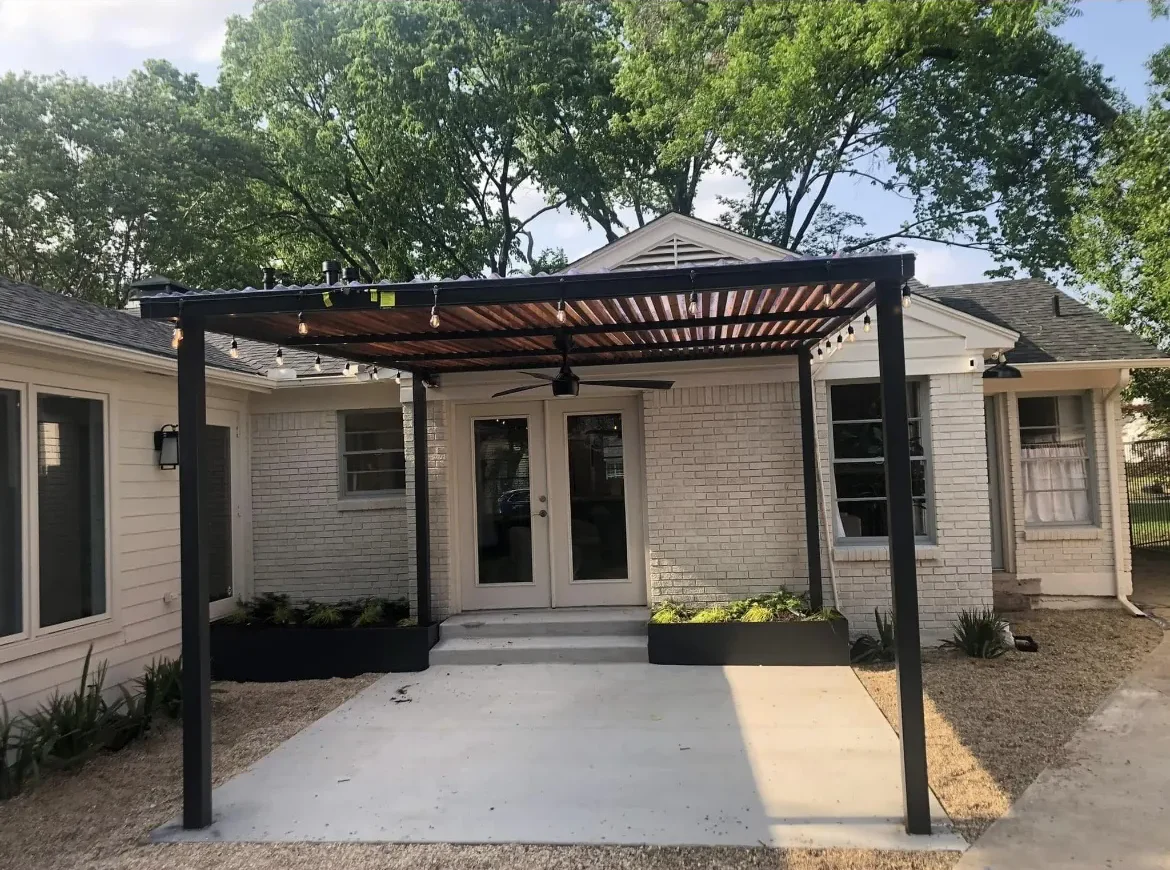
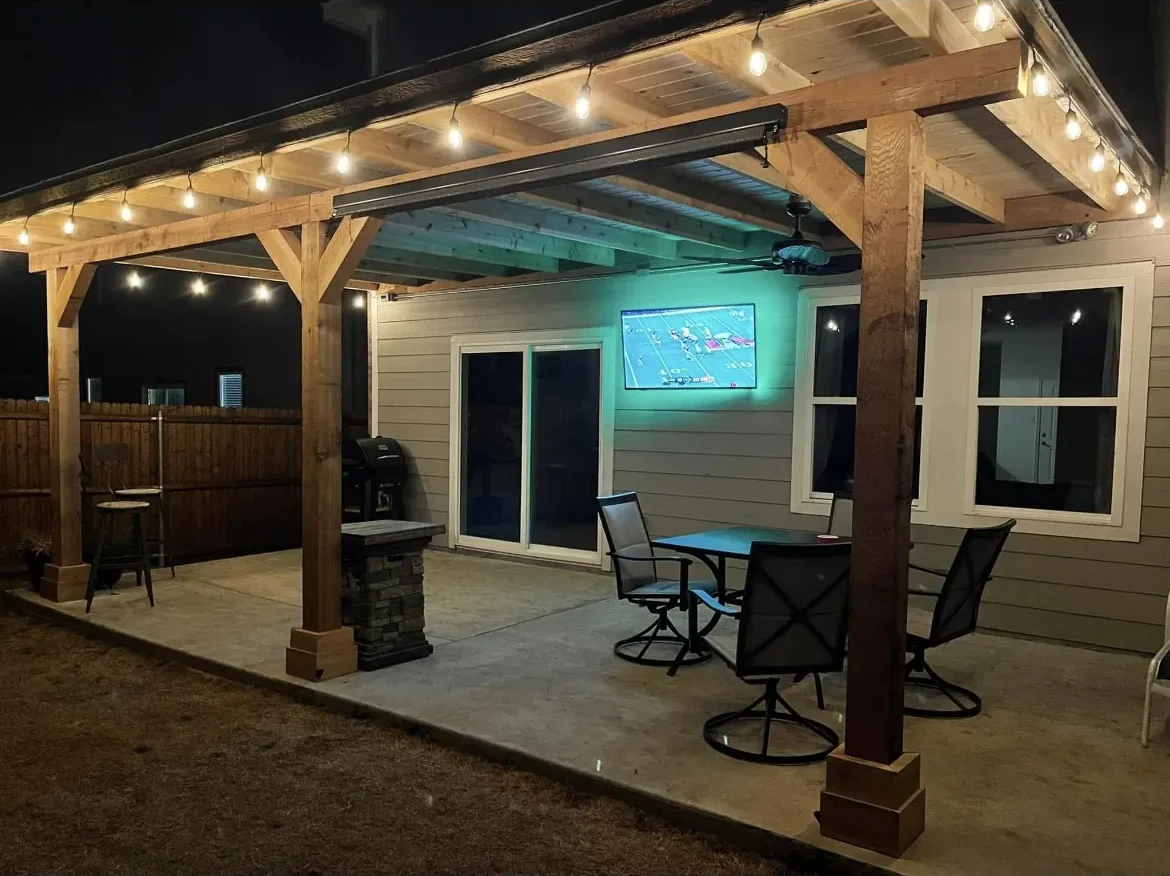
Archetex serves Dallas, Addison, Garland, Rowlett, Richardson, Farmers Branch, Plano, Frisco, McKinney and Rockwall. Customers mention the communication and daily updates, the help with design and a clean site. To talk about your yard, contact Matthew or call (430) 318-6275. If you are also planning a patio or covered area, see outdoor living spaces.