What a pergola is, and when to build one instead of a patio cover
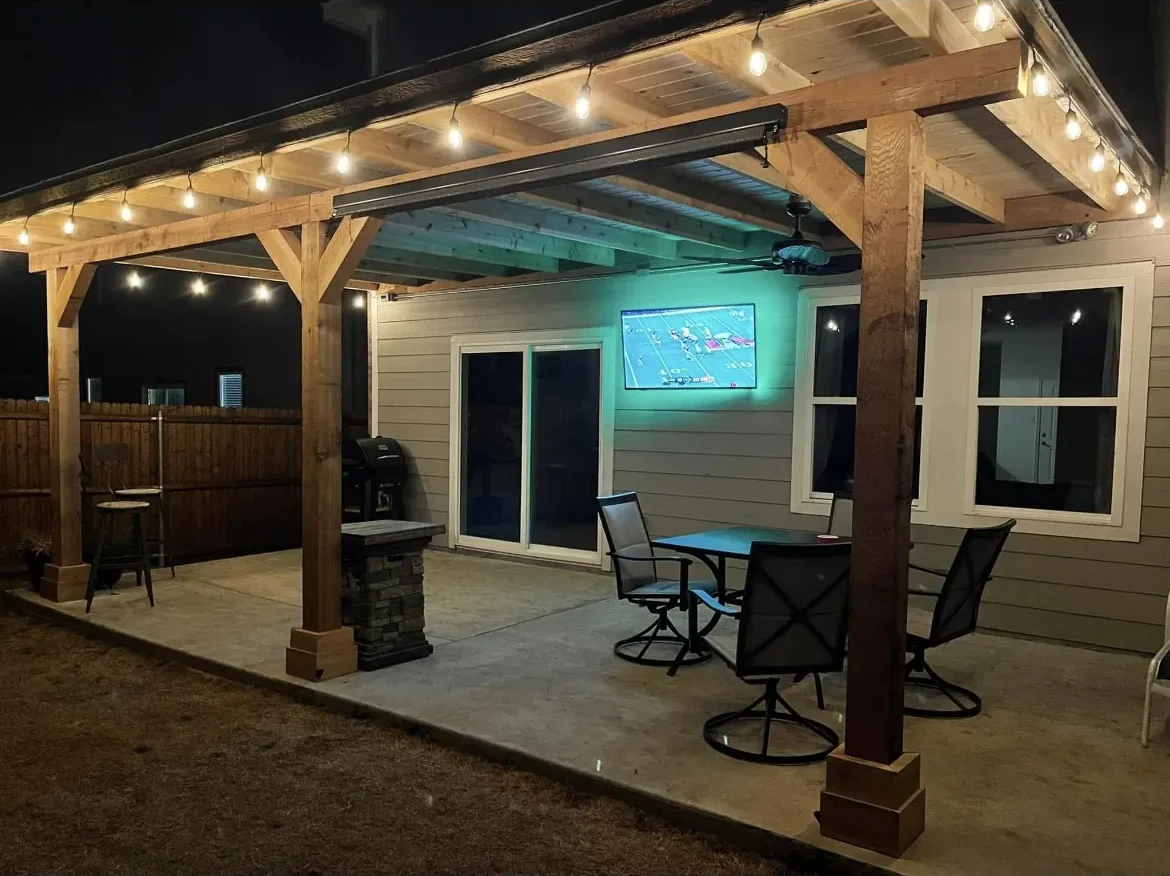
A pergola is an open-roofed frame of posts, beams and rafters (or slats) that filters sunlight without sealing out the sky. It is the right choice when you want shade and airflow over a patio, deck or hot tub but do not need to stay dry in the rain. If you want a solid roof, a ceiling, recessed lights and fans, that is a different structure: see our covered patios page, which covers solid-roof patio covers and pavilions.
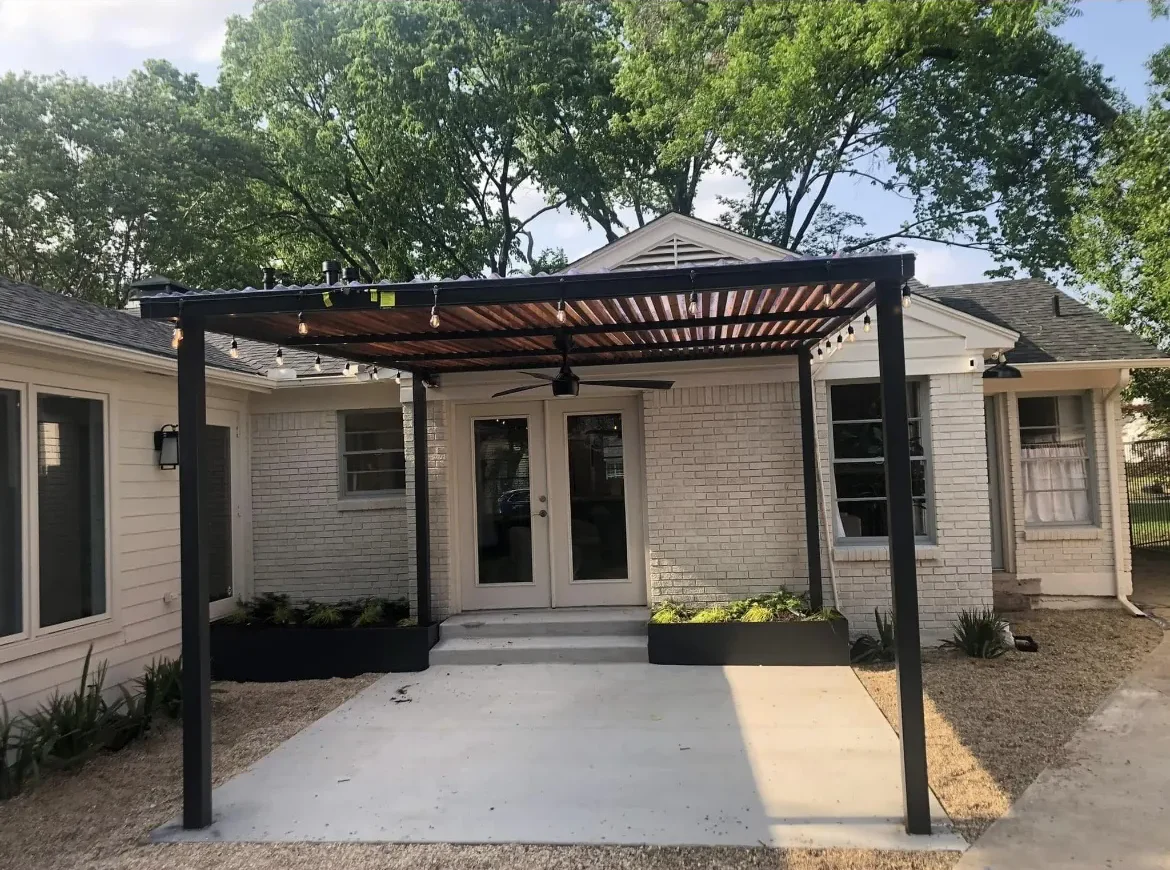
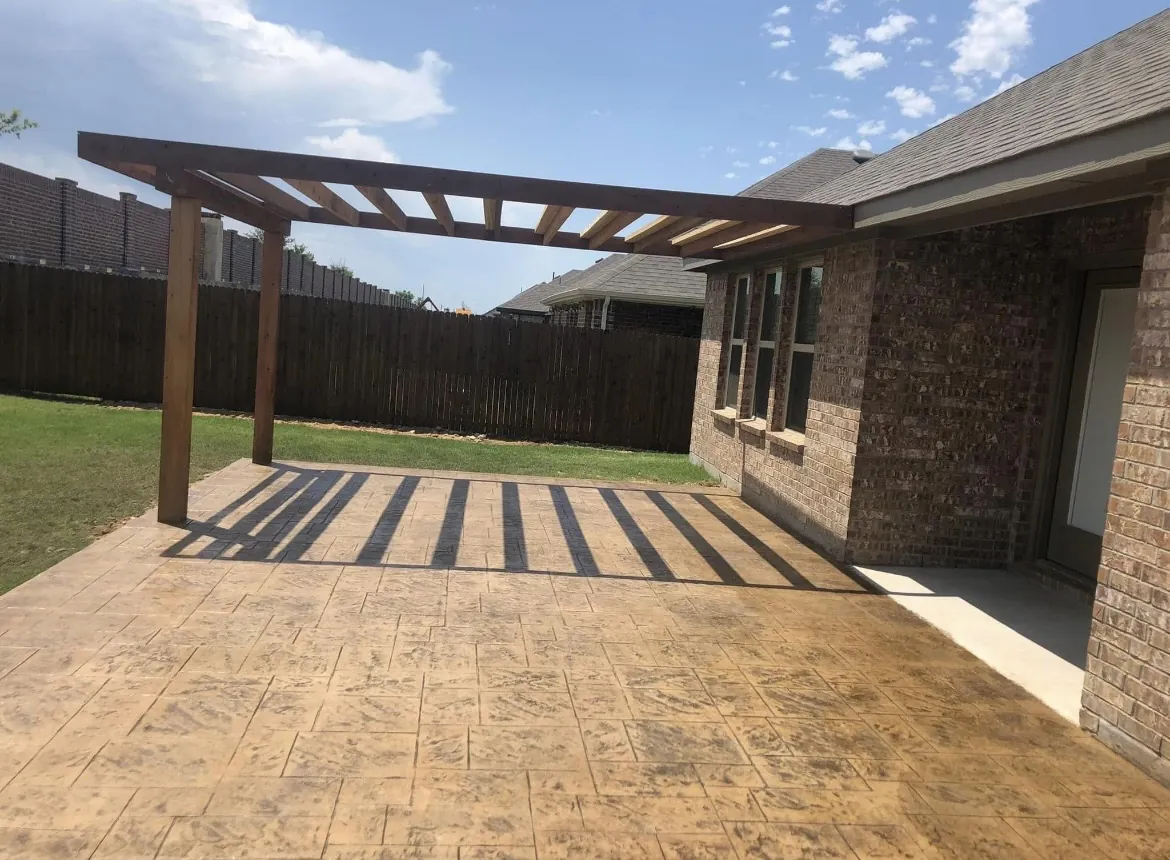
Archetex Outdoor Design Co. builds pergolas in two broad styles, both shown in our project photos: cedar pergolas attached to the house over a patio, and modern black slatted pergolas with a dark frame and close-set slats overhead. Matthew starts with how the space is used (where the afternoon sun lands, where the table sits, which door you walk out of) and how the pergola meets the house, then sizes the frame to that.
Dallas TX pergola cost 2026: prices by size and material
A custom-built pergola costs about $3,000 to $21,000 installed for common sizes from 10x10 to 16x20 ft, according to HomeGuide's pergola cost tables (updated October 2024); size drives most of the difference. Prefab kits installed by a contractor come in lower. These are national figures; Dallas labor and lumber prices move them, so treat them as a starting point, not a quote.
| Size | Area | Prefab kit, installed | Custom built |
|---|---|---|---|
| 10 x 10 ft | 100 sq ft | $1,000 to $4,000 | $3,000 to $6,500 |
| 12 x 12 ft | 144 sq ft | $1,450 to $5,750 | $4,300 to $9,350 |
| 16 x 20 ft | 320 sq ft | $3,200 to $12,800 | $9,600 to $20,800 |
| 20 x 20 ft | 400 sq ft | $4,000 to $16,000 | $12,000 to $26,000 |
HomeGuide also puts custom-build labor at $2,000 to $7,000 and lists the main material rates. Cedar materials run about $25 to $40 per square foot. Forbes Home's 2024 guide puts installed cedar pergolas at $25 to $35 per square foot and aluminum or vinyl at $10 to $30. Louvered roofs with adjustable blades cost much more: HomeGuide lists $45 to $110 per square foot for manual louvers and $55 to $125 for motorized ones. Archetex does not publish set prices; Matthew gives a written price after a free site visit.
Cedar pergola vs modern black slatted pergola
Choose cedar for warmth and a traditional look, and a dark slatted frame for a modern house or denser shade. Neither is right for every home, and the decision usually follows the house itself.
- Cedar. Takes stain, matches wood fences and decks, and suits brick ranch and traditional homes. In full Texas sun, untreated cedar weathers to gray, so plan on cleaning and resealing if you want to keep the color.
- Black slatted (metal or metal-look). Clean lines, little upkeep and a contemporary feel. Closer slat spacing gives more shade than a classic rafter layout. A metal frame is often a manufactured system; in Frisco, any pergola-type structure made of aluminum, steel or vinyl must be engineered as part of the permit.
- Mixed. A dark frame with wood-tone slats, or cedar with black hardware, splits the difference.
Attached vs freestanding pergolas
An attached pergola connects to the house on one side and stands on posts on the other; a freestanding pergola stands on four or more posts of its own. Attached pergolas shade the back door and make the patio feel like part of the house. Freestanding ones define a spot out in the yard: over a hot tub, a fire pit or a dining area away from the house.
The attachment is where shortcuts happen. The City of Plano's patio cover checklist, for example, says a patio cover may not be anchored to brick or other non-masonry veneer, because veneer is a facing, not structure. A properly attached pergola ties into the house framing with the right brackets and bolts. Plano reviews attached patio covers as additions to the house and detached ones as accessory structures, which must have at least two open sides and be structurally independent.
Sizes, and shade options from open rafters to louvers
Size the pergola to the furniture, not the slab: allow room to pull a chair back from a table and walk around it. Common sizes run from 10x10 ft over a small patio to 16x20 ft or more over a full outdoor living area. Then pick how much shade you want overhead.
- Open rafters. The classic look; shade moves through the day as the sun crosses the rafters.
- Tight slats. More blocking with the same open feel; the modern black slatted style.
- Shade cloth or a retractable canopy. HomeGuide puts a retractable canopy roof at about $4 to $10 per square foot installed, and a replacement canopy at $80 to $250.
- Louvered roof. Adjustable aluminum blades that open for sun and close against rain. The most expensive option (see the rates above).
- Lighting and fans. Wiring is easiest to plan before the beams go up. Block Renovation notes that electrical work typically needs a permit in the Dallas area.
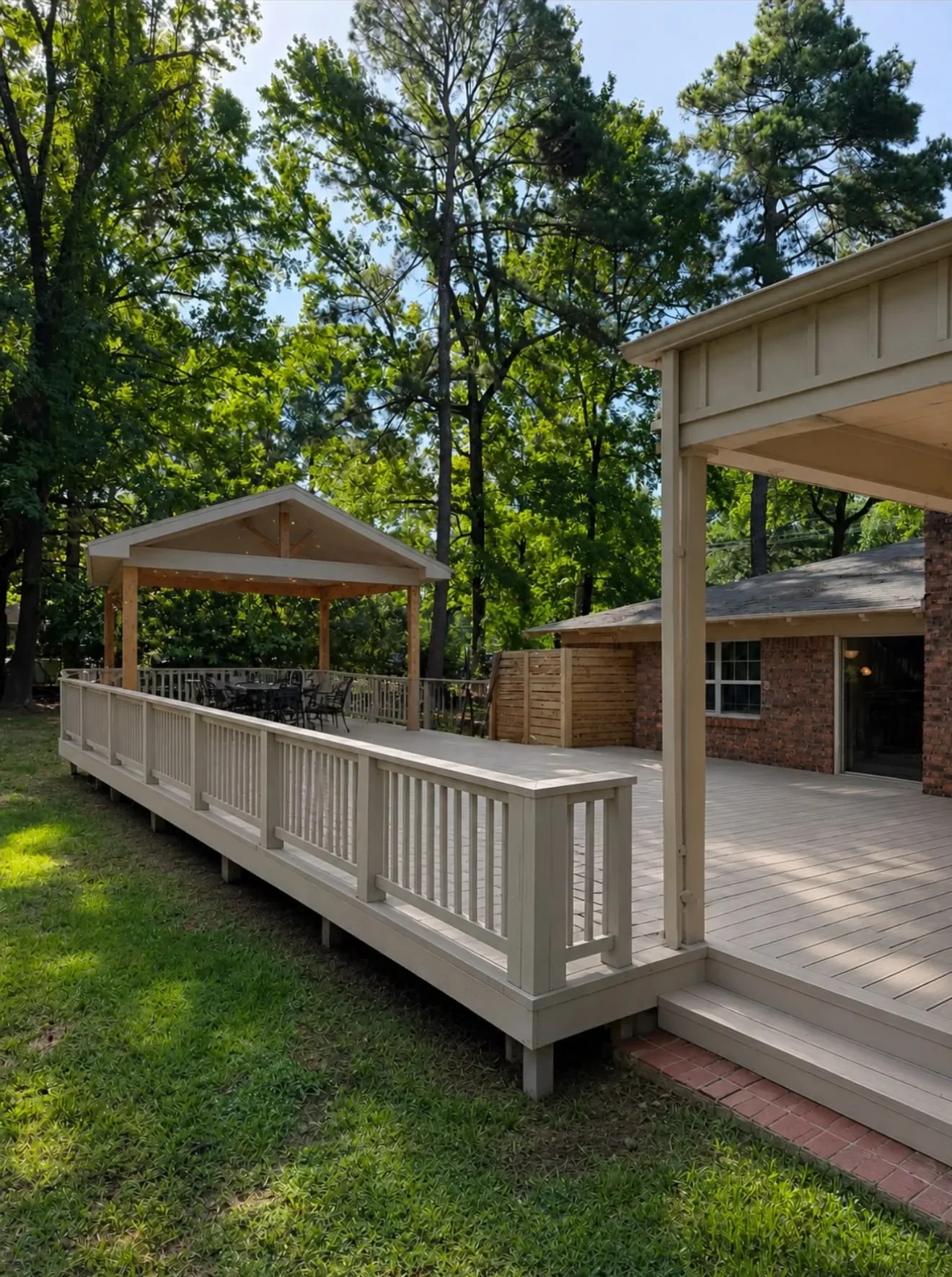
If you find yourself wanting a fully solid roof, that is a covered patio. Read about covered patios in Dallas before deciding.
Footings in Dallas clay
Pergola posts in North Texas need footings designed for expansive clay, because the soil swells when wet and shrinks when dry. Much of Dallas sits on Blackland Prairie clay; Houston Black, the unofficial Texas state soil, is the classic example of this shrink-swell soil, according to the Soil Science Society of America. A post set shallow in that clay can heave or lean after a wet spring and a dry August.
Matthew sizes footings and framing to the structure's load and the site, the same way he builds decks: not a one-size prefab kit. Where a pergola sits on an existing slab, the slab thickness and edge need checking before posts are bolted to it. Cities ask about this too: Frisco's permit submittal asks for a footing detail showing how posts attach, the hole depth and whether there is concrete and rebar.
Dallas pergola permits and accessory structure rules
Plan on a permit for most pergolas in Dallas, and always for an attached one. The City of Dallas Planning and Development guide says a porch or deck that is attached to the house or has a roof needs a Residential Alteration Addition Permit. Its exemption for freestanding, open-air decks applies only under 200 sq ft and no more than 30 inches above grade, among other conditions. The city's building inspection FAQ also lists patio covers under 200 sq ft outside the front and side yard setbacks among work that needs no permit, except in historic, conservation and planned development districts. Pergolas are not named separately, so ask Development Services, or let your builder confirm it, before assuming a freestanding pergola is exempt.
Two other Dallas rules matter. The city's building inspection FAQ says detached accessory structures closer than five feet to a side or rear property line need a one-hour fire separation. And homes in a historic overlay district need a Certificate of Appropriateness before exterior work. On fees, the City of Dallas permit fee schedule (effective July 1, 2025) has no flat deck fee: a residential permit carries a plan review fee of $0.046 per square foot or $577, whichever is greater, plus a base permit fee and a $125 inspection fee per trade; ask the city for the exact total when you apply.
HOA approval in Plano, Frisco and McKinney
Get HOA approval before you apply for the city permit. Many master-planned neighborhoods in Plano, Frisco and McKinney have deed restrictions that cover backyard structures. Frisco's residential permit form notes that some subdivisions require HOA approval, and Plano's patio cover checklist tells applicants to contact their HOA about deed restrictions. Block Renovation notes that Dallas-area HOAs commonly set setbacks of 5 to 15 feet from rear and side lines, height limits for pergolas and approved materials and colors.
A typical HOA submission includes a site plan showing the pergola and its distance to property lines, an elevation drawing with the height, and the materials and stain or paint color. Plano also limits coverage: on a standard lot, accessory buildings, the garage and structures such as arbors together may not exceed 45% of the lot area. Ask your builder to supply the drawings and material details for the HOA package.
How to choose a pergola builder, and what a written quote should include
Pick a builder who shows finished pergolas, answers the attachment and footing questions directly and puts the price in writing. TexasLawHelp.org notes that Texas does not require general contractors to be licensed, so check reviews, ask for references and photos of similar work, and confirm who pulls the permit. A good written quote lists:
- Size, height and whether it is attached or freestanding.
- Material and finish: cedar grade and stain, or the metal system and color.
- Footing method and depth, or how posts attach to an existing slab.
- Rafter or slat spacing and any shade cloth, canopy or louvers.
- Electrical work for lights or fans, and who permits it.
- Permit and HOA paperwork, cleanup, schedule and payment terms.
Archetex Outdoor Design Co. is rated 5.0 on Google from 17 reviews, and customers repeat the same things: communication, punctuality and help with design. One wrote that Matthew "communicated well throughout the entire process giving us updates on deliveries, goals for the day, and progress made." Ready to price a pergola? Request a free estimate or call or text Matthew at (430) 318-6275. Pairing it with a new deck? See our deck builder page and outdoor living spaces.