Who builds decks in Rockwall TX, and what does the job involve?
A Rockwall deck is a Dallas-area deck with three extra layers: a City of Rockwall permit, HOA approval if you live in an association, and takeline rules on lots that back onto Lake Ray Hubbard. The building itself is the same work anywhere. The job is designed around the house, footings go into clay, the frame goes up, and boards and railing go on. The paperwork and the lot are what make Rockwall different.
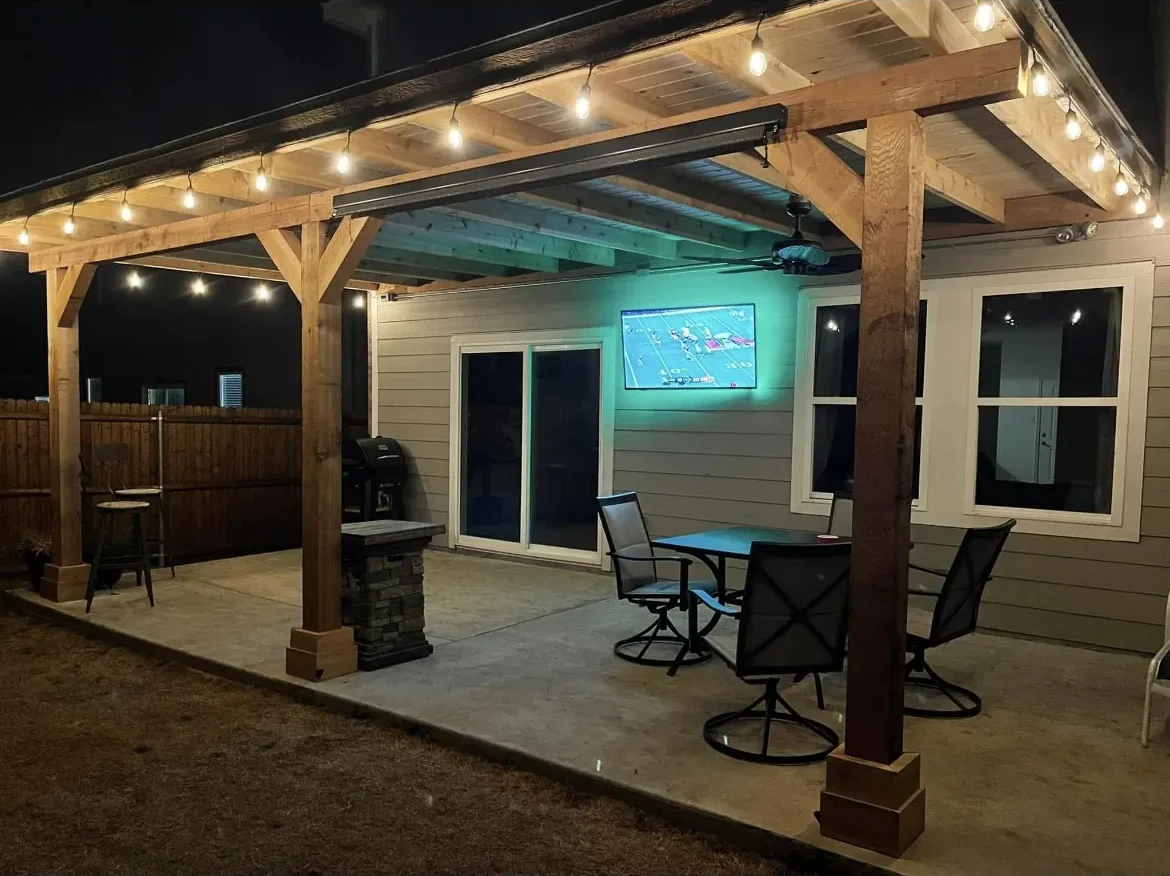
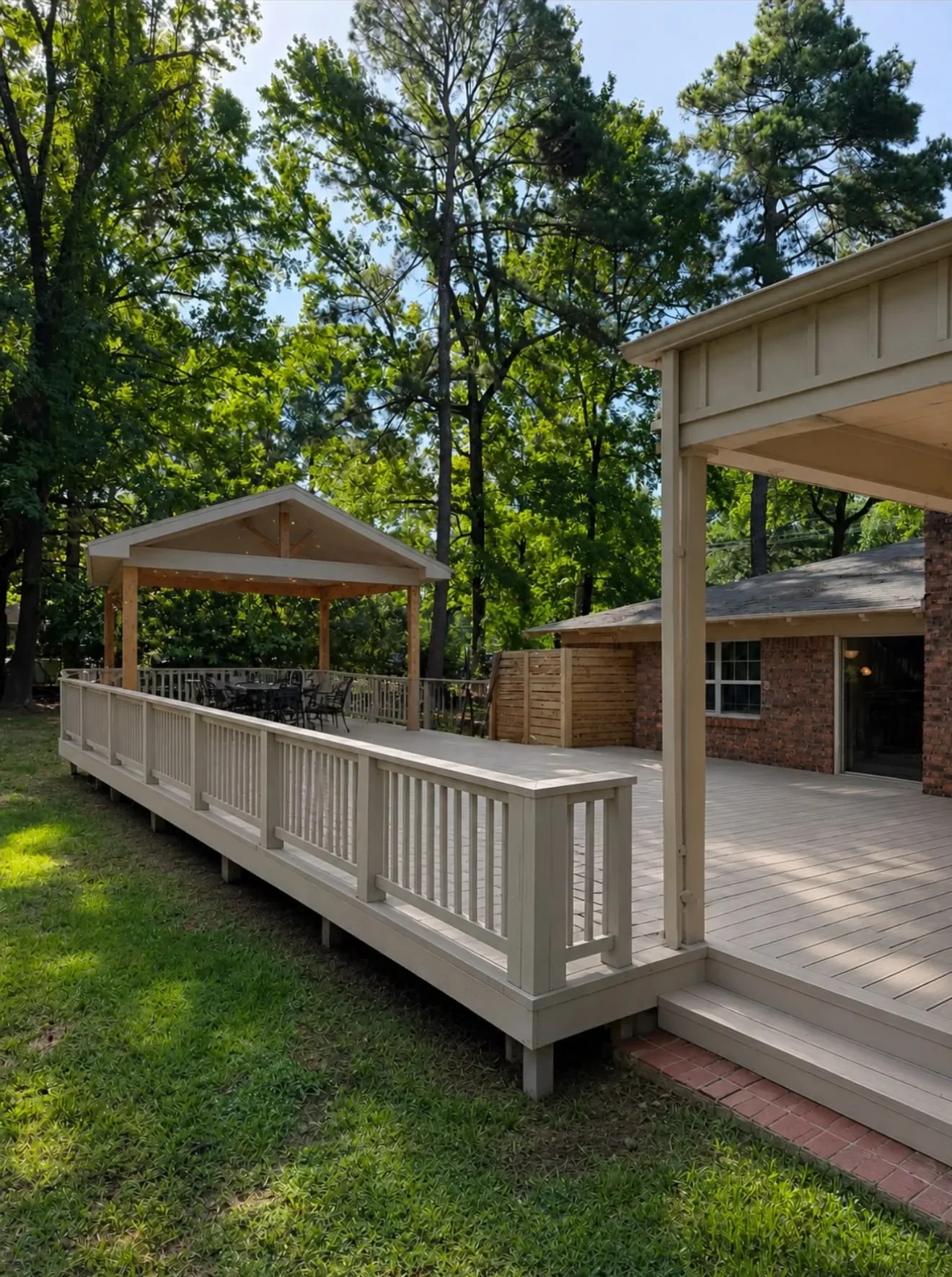
Archetex Outdoor Design Co. is a Dallas-based builder that serves Rockwall, rated 5.0 on Google from 17 reviews. Its decks are designed around the home’s actual elevation and how the yard is used. Wood or composite is chosen on upkeep and budget. Footings and framing are sized to the home’s elevation and load rather than taken from a one-size prefab kit, and railings are built to code from the start. Every deck follows the same four steps:
- Consultation and material selection. A site visit, how you want to use the deck, and the choice of boards. On a Rockwall job this is also when the permit, HOA and any takeline paperwork is worked out.
- Footings and framing. Sized to the elevation and the load, on ground that moves with the seasons.
- Decking and railing installation.
- Final walkthrough and cleanup, with care recommendations for the material you chose.
For the full Dallas-wide guide to deck design and materials, see the Dallas deck builder page. For everything else Archetex builds in town, see Rockwall service area.
How much does a deck cost in Rockwall TX in 2026 per square foot?
Expect roughly $15 to $30 per square foot installed for pressure-treated wood and $25 to $50 for composite. Those are Block Renovation’s 2026 Dallas figures. No Rockwall-only price survey exists, and the city is part of the same Dallas-area labor and lumber market. The City of Rockwall permit fee comes on top; check the current amount with the city’s Building Inspections department.
| Deck | Pressure-treated wood | Composite |
|---|---|---|
| Per square foot, installed (Block Renovation, 2026) | $15 to $30 | $25 to $50 |
| 200 sq ft | $3,000 to $6,000 | $5,000 to $10,000 |
| 300 sq ft | $4,500 to $9,000 | $7,500 to $15,000 |
| 400 sq ft | $6,000 to $12,000 | $10,000 to $20,000 |
The size rows multiply Block Renovation’s per-square-foot range by the area. They leave out stairs, upgraded railing, lighting and any cover. Replacing an old deck costs more than the boards alone. Fixr puts replacing a 300 sq ft deck at $6,000 to $18,600, against $500 to $3,000 to repair one. Lake lots tend to cost more because they are often sloped, high off the ground and exposed to wind. For the full Dallas-area breakdown, read how much a deck costs in Dallas. Archetex gives a written price after a free site visit.
Do you need a permit to build a deck in Rockwall?
Yes. The City of Rockwall’s Building Inspections department says driveways, patios, patio covers and decks require building permits. Its deck permit sheet asks for:
- Two site plans showing where the deck will be located.
- The deck’s dimensions, height, stair location and means of support.
- A framing layout giving the size of every post, joist and girder. The sheet says these must be sized and spaced to the 2015 International Residential Code; ask the city which edition it enforces now.
- The permit fee, set by the city’s fee schedule. Check the current amount with the City of Rockwall.
If the deck gets a cover, that is a separate permit. Rockwall’s permit sheet for arbors, pergolas and patio covers and the accessory-structure table in its Unified Development Code (as amended in 2020) work like this:
- A pergola or covered porch attached to the house must meet the same setbacks as the house.
- A detached pergola must sit at least 3 feet from rear and side property lines and 6 feet from other buildings.
- The city wants two sets of scaled plans: site plans, a foundation or pier plan, a roof framing plan, elevations and a typical cross section.
Two smaller rules catch people out. First, a 2020 change to the city’s Unified Development Code exempts pergolas from the limit on how many accessory structures a lot can have, but they still count toward the zoning district’s lot coverage limit. Second, the city’s pool guidelines say no part of a pool, its equipment or its decks is allowed in easements. Pool decks therefore have to stay clear of utility and drainage easements on the plat.
Building a deck on a Lake Ray Hubbard lot in Rockwall: the takeline rules
If your back yard runs down to Lake Ray Hubbard, part of it is probably not yours. Rockwall’s takeline rules decide what can be built on that strip. The Texas Water Development Board says the dam is owned by the City of Dallas and operated by Dallas Water Utilities. The lake was impounded in 1968 and covers 20,947 acres at its conservation pool elevation of 435.5 feet. The Texas State Historical Association says the lake covers 13.55 percent of Rockwall County, which is the smallest county in Texas.
The land between the shoreline and private lot lines is the take area. It is not owned by the homeowner. The arrangement works like this:
- The lease chain. The City of Dallas leases the take area to the City of Rockwall under a lease dated January 16, 2001, and Rockwall subleases portions to adjacent property owners. Rockwall’s sample residential sublease runs to January 16, 2041, and transfers to the new owner when the house sells.
- Lease first. The city says you need a takeline lease from Building Inspections before you submit any permit application there.
- Lot width. Permits are issued only for detached single-family lots at least 45 feet wide at the front building line, or 35 feet on a curved street or cul-de-sac.
- Size and location limits. The overlay limits the size, height and location of decks and patios in the take area. Nothing over 6 feet tall may go in the view clear zones that protect neighbors’ lake views. Check the current limits with the City of Rockwall before you design.
- Going bigger. Decks, patios, gazebos and stairs that exceed these standards can be allowed through a Specific Use Permit, which needs City Council approval. Standards the ordinance expressly prohibits cannot be waived.
- Earthwork and boat structures. Earthwork must follow the erosion-control standards in the Dallas lease. Anything boat-related needs a seawall permit first and plans sealed by a structural engineer.
In practice, a lake-lot deck is often two projects: a deck on your own lot, which needs a normal city permit, and anything on the take area, which needs a sublease and has its own limits. Work out where the takeline crosses your yard before you design anything.
Wind is the other lake factor. Open water gives wind a long run at exposed lots, so a deck high off the ground, and especially one with a cover, needs its posts, connections and footings planned for that load. A deck on a sheltered lot a few miles inland does not face the same forces.
HOA approval for decks in Rockwall subdivisions
If you live in a subdivision, expect to need HOA approval. The city’s Planning and Zoning department keeps a Neighborhood Notification Program list of registered HOAs and neighborhood groups, which it notifies about zoning cases within 1,500 feet of their boundaries. Associations named in city zoning notices include Chandlers Landing Community Association and Breezy Hill Estates Homeowners Association.
Every association has its own deed restrictions, so ask for the current architectural guidelines and application form before you design. Block Renovation’s 2026 Dallas guide notes that HOA rules commonly cover:
- the height of patio covers and pergolas;
- setbacks, often 5 to 15 feet from rear and side boundaries;
- approved materials and colors.
The guide advises contacting the architectural review committee before you take bids. A typical submission is a site plan showing the deck on the lot, elevations or drawings, and the board and railing material and color. Most of that is the same information the city asks for, so it makes sense to prepare both at once. On lake lots in an HOA, you may be dealing with the HOA, the city and the takeline sublease all on one deck.
Rockwall soil: why deck footings matter here
Rockwall County sits on the Blackland Prairie, so footings are the part of a deck not to skimp on. The Texas State Historical Association describes the county’s soils as having loamy to clayey surfaces over cracking, clayey subsoils. The Soil Science Society of America says the Blackland Prairie clays swell when wet and shrink and crack when dry. A deck on shallow or undersized footings can heave and settle with the seasons until boards pull, stairs drift away from the landing and railings go out of plumb.
That is why Archetex sizes footings and framing to the home’s elevation and load. A low deck off a slab-on-grade house and a tall deck on a sloping lake lot need very different foundations. No source puts a dollar figure on what clay adds to a Rockwall deck. Be wary of a quote with a vague soil charge and no footing plan behind it.
Composite or wood for a Rockwall deck?
Composite costs more up front and much less to keep up. Wood costs less to build and needs regular sealing. On an open Rockwall lot or a lakefront deck with no shade, sun is the main factor. Block Renovation’s Dallas guide says composite handles UV better than wood. Trex says a wood deck can cost up to $400 a year in stain and sealant, against as little as $10 a year for its composite (that is the manufacturer’s own claim). Trex also says composite gets hot in direct sun, and the darker the color, the hotter it feels. Lighter boards or a shade structure help.
- Grey composite: lowest upkeep. A good fit for full-sun lake decks you do not want to restain.
- Cedar: warm look and naturally rot-resistant. It needs a finish to hold its color.
- Pressure-treated pine: the lowest cost, and often used for the framing under composite boards.
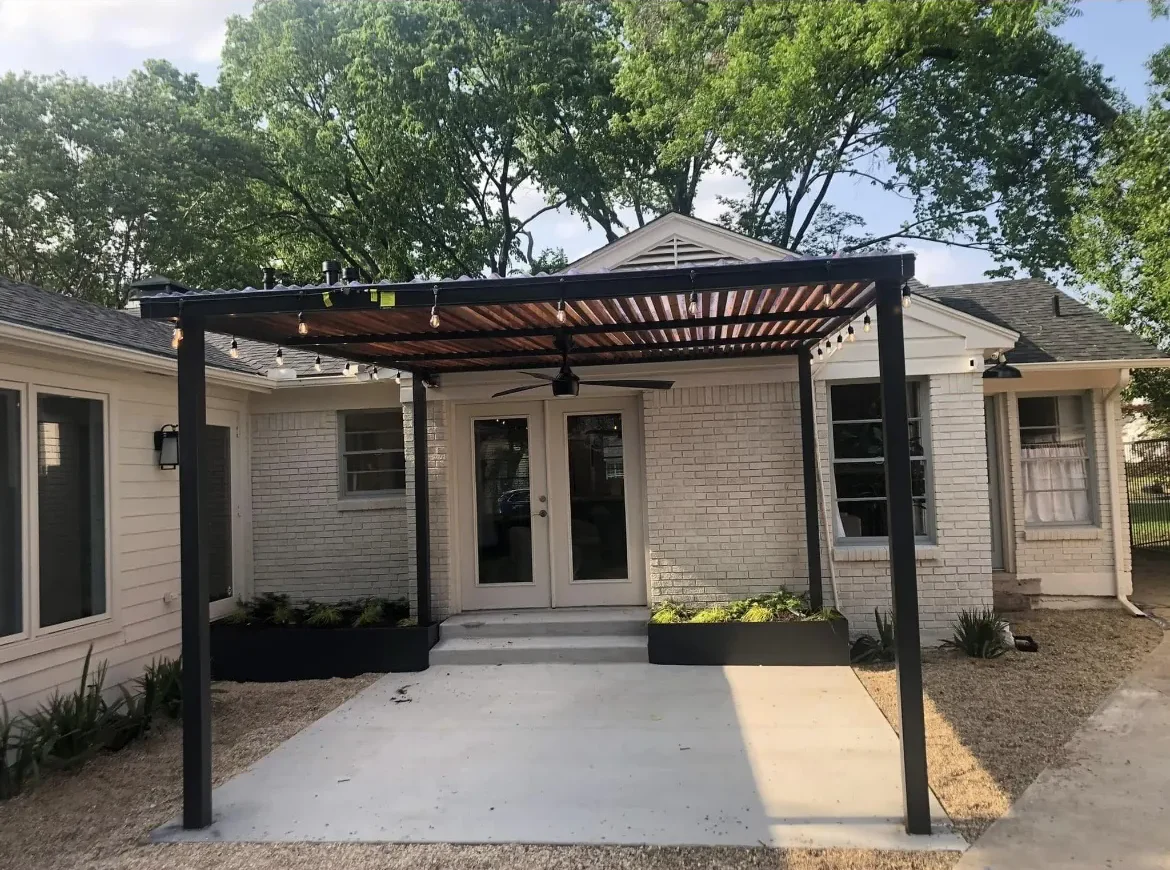
If the deck is in full afternoon sun, an attached pergola or pavilion is worth pricing at the same time. It is cheaper to design in now than to add later. See covered patios and pergolas.
How to choose a deck builder in Rockwall and what a written quote should include
Choose the builder who can show finished decks, explain the footing plan and handle Rockwall’s paperwork. Texas does not license general contractors at the state level, so check insurance, references and finished work yourself. TexasLawHelp.org advises getting the contract and payment terms in writing. A good written quote for a Rockwall deck should state:
- Size, height and layout, including stairs and landings.
- Board and railing material and color, and what the frame is built from.
- The footing plan: how many footings, how deep, and how they are sized.
- Who applies for the City of Rockwall permit, and that the permit fee and the plans are included.
- Takeline status on lake lots: whether any part of the deck is in the take area, and who handles the sublease or Specific Use Permit.
- HOA approval: who prepares the submission and whether work waits until it is approved.
- Schedule, payment terms and cleanup.
Archetex’s reviews keep coming back to communication, daily updates and a clean site. You can see finished decks and covered structures on our work. To book a free site visit in Rockwall and get a written price, contact Matthew or call or text (430) 318-6275.